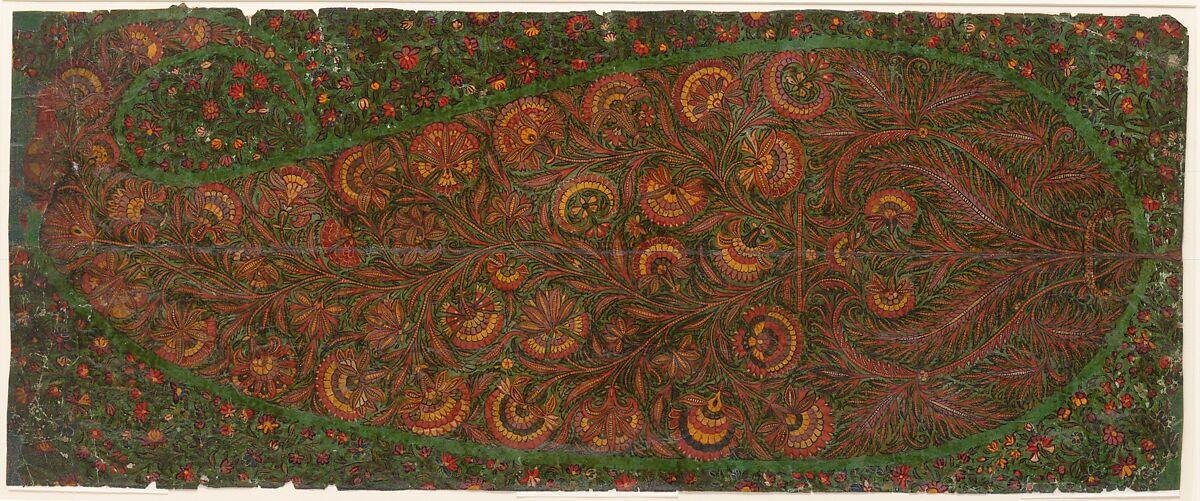
The Metropolitan Museum of Art preserves a remarkable group of painted shawl-design drawings associated with British trader William Moorcroft. He sent a group of 34 designs from Kashmir to England; eight survive in the museum’s collection. They include richly coloured, elongated boteh motifs, with notes identifying colours and in many cases, the people and places associated with the original commissions.
The drawings were intended to help European manufacturers translate the designs into patterns for their own weaving industry.
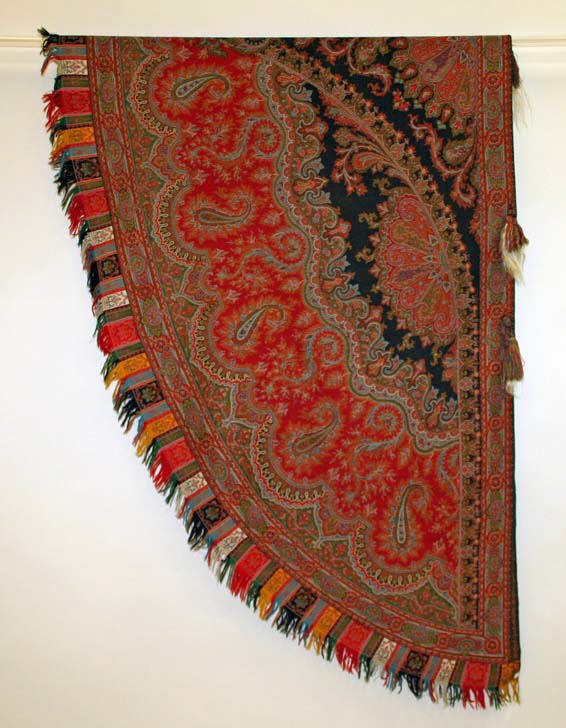
Think about that: the design of a Kashmiri shawl could be recorded on paper, shipped across the sea, translated into a weaving plan and used to make another textile thousands of kilometres away.
A shawl could travel twice, once as cloth and once as an idea.