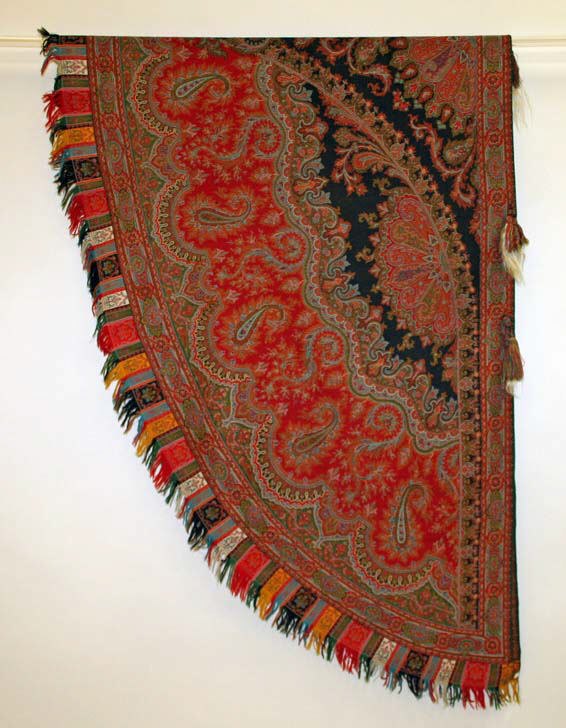
As European manufacturers developed ways to reproduce shawl designs, imitations became more widely available. In the 19th century, embroidery also offered a way to create elaborate decorative schemes more quickly than some complex tapestry-woven designs. The Met notes that this helped manufacturers respond to growing European demand.
By the later 19th century, changes in fashion, economic disruption and shrinking European markets contributed to a serious decline in the Kashmiri shawl industry. Many artisans faced hardship.
It is a less comfortable story, but an important one. The rise of a luxury product can bring prestige and opportunity, while mass imitation can make it harder for the original makers to sustain their livelihoods.
The lesson: the value of a handmade shawl is not only in the pattern that can be copied. It is in the knowledge, labour and people behind the original.